Bonded To Priests As Domestic And Sexual Servants – Trokosi

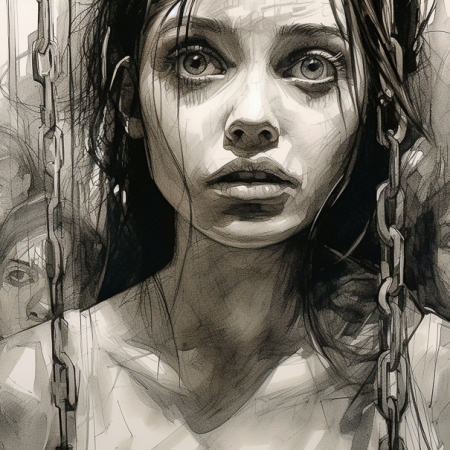
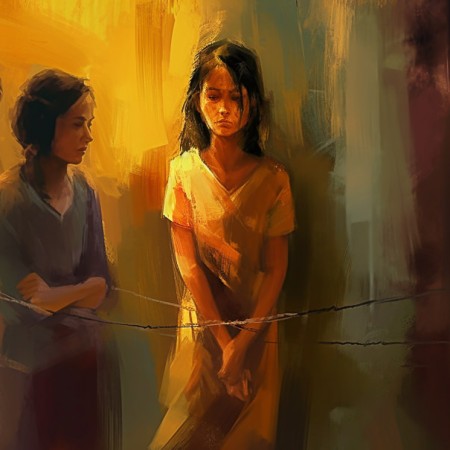
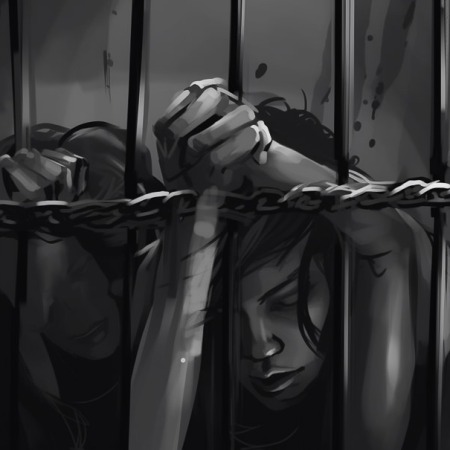
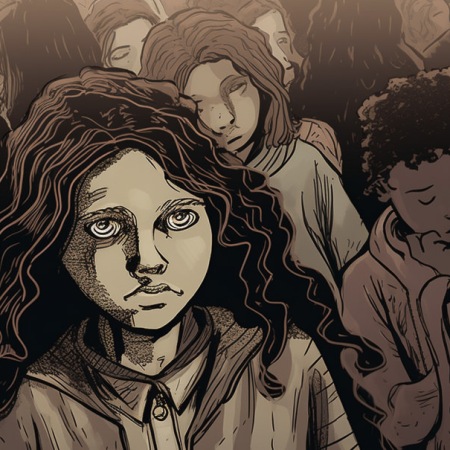
TrokosiThe following message came to me in an email a few days ago. “I am currently working on a film that deals with the little known system of bondage in Ghana, called Trokosi,” Christene Browne wrote to me. “Trokosi is a religious practice whereby young virgin girls are made slaves to shrines for offenses committed by a member of their family. To appease local gods, the girls are bonded to the priest of the shrine for life and become their domestic and sexual servants.”

Christene, via Syncopated Productions, is still seeking funds to finish Sena – A Film About Slavery. The film is based on the stories she was told during visits to Ghana. The film takes its name from the main character, Sena, whose dreams of being a nun are shattered when she is secretly sent off to a shrine to atone for a crime that she did not submit. The film tells the story of how she endures through numerous atrocities and inhumanities.

A short interview. I asked Christene if I could ask her a few questions to learn more about how she came to make the film, and what she hoped it would accomplish.

How did you first become aware of child slavery?

I first became aware  of Trokosi practice ( a form of child slavery) back in 2000 while I was visiting Ghana for the first time. There was a news report about the practice on a local TV station one night.

What surprised you most about your experience with child slavery?

What surprised me most about the practice was that it could  still exist in the present day  even in the face of some serious opposition/ legislation (It existed for centuries but had been criminalized in 1998.) The fact that the practice was/is sanctioned by many of the traditional religious practitioners was also very surprising. According to them the young girls were/are being sent to the shrines for educational purposes.

How did you first come into contact with a former Trokosi? 

After my first trip to Ghana – I returned home and applied for some research funding with CIDA ( Canadian International Development Agency). Before returning to Ghana I contacted a number of organizations and individuals who were doing work with the Trokosi. ( I had friend in Ghana helping)   My main contact was a man by the name of Elvis Adikah – who was in the midst of doing research on the practise. He was the one who put me in direct direct contact with former Trokosi – he also acted as my interpreter.

We travelled for about five weeks in the Volta region of Ghana to remote hard to reach villages- meeting young and older former Trokosi – and collecting testimonies. During this trip I was also able to visit some active shrines, meet with some of the priests of the shrines, some government officials, a number of NGO groups and some leaders in the African traditional religion movement. In one of the  active shrines, I met an older woman whose job was to oversee the Trokosi – she had been in the shrine for over 60 years. (She is featured in the research interview clip below)

My meetings with the former Trokosi took place in their homes and at so called rehabilitation centers.  The majority of the younger former Trokosi were at these rehabilitation centers where they were learning skills, like sewing, to help them better reintegrate into society.

There is a great stigma associated with former Trokosi – many people believe that they bring misfortunes - so reintegration is very difficult.

Why did you decide to make your film?

Ever since I  had the opportunity to meet and interview a number of former Trokosi , I felt compelled to tell their story. The stories that I heard were devastating and  touched me greatly.

What do you hope people will do as a result of watching the film?

I hope the film will spark a new debate about the practice and  bring the silent suffering of the Trokosi to the forefront. Giving a voice to the voiceless is something that I have done in many of my past projects. Ultimately I hope to inspire people to take decisive actions towards stopping this archaic system of bondage.

If you’ve read this far, I hope that you will help me in spreading the word about Christene’s film, Sena – A Story Of Slavery, or prehaps, even contributing to the completion of the film.

Tagged , , ,

Slavery Is All Around Us.

Lisa Kristine is a humanitarian photographer who specializes in images of remote indigenous peoples. “Kristine has collaborated with international humanitarian organizations and is often asked to present her work to inspire discussions on human rights and social change.”

She is a storyteller. This is her story from her TEDxMaui 2012 presentation designed to shed light on the world of modern day slavery. “It’s all around us,” she says. “We just don’t see it.” Her photos and story will help you see it better.

Investigating Sex Trafficking – The Price Of Sex

“The film opened my eyes to the scope and scorching pain of the human trafficking problem. While it is difficult to watch—you should see it. The best weapon against this blight is awareness.” — David Jacobson, Ambassador of the United States of America

You can see if there is a screening of The Price of Sex near you, or purchase a DVD for home use, or for play at public schools or universities.

“The portraits of the women featured in the film are powerful and heart-rending… Suitable for some mature high school classes and for college courses in cultural anthropology, anthropology of women/gender, anthropology of globalization/neoliberalism, and Eastern European studies, as well as general audiences.” - David Eller, Anthropology Review Database

Tagged , ,

Stop Joseph Kony – But Don’t Stop Thinking

Yesterday I posted “Stop Joseph Kony” in haste. Several friends asked me to say something. But I didn’t give the post the level of attention and due dilligence I should have. Today I’m making an attempt to correct my mistake.

“If the world knows who Joseph Kony is, it will unite to stop him.” It’s a compelling statementThis is part of the #KONY2012 campaign that has gone viral on Twitter and Facebook.  There’s a lot of truth to that statement. It’s amazing to me that it is taking the world community so long to take action against this man. But the story in Uganda is bigger than this Joseph Kony. And I’m certainly NOT the right person to help anyone fully understand the historical and political issues that make the conflict larger than the KONY 2012 video explains. I’m not Ugandan.

I’ve had links to Invisible Children on this blog for as long as I’ve been writing here. I’ve written about the plight child soldiers before. The first time five years ago in 2007. As always, it’s important to understand what our support is fueling, and how, and what our awareness accomplishes. I’m writing here again because I’m concerned with the lack of understanding about what might really be happening in Uganda right now, and where the money being raised by Invisible Children is being spent. Viral can be good, but not if it causes us to act without doing research.

Look at all sides of an issue. Here is a critical look at Invisible Children and the KONY 12 campaign. Doing nothing is not an option, certainly. But we need to make choices with as much information as we can get our hands on.

Here is more perspective, some from people on the ground in Uganda. I’ll be adding more links to this post as I find them. Read these, read what is available at Invisible Children, then decide for yourself how you will act.

Stop Joseph Kony

“If the world knows who Joseph Kony is, it will unite to stop him.” It’s amazing it is taking the world so long to take action against this man.

Help raise awareness of the evil that is Kony’s Lord’s Resistance Army, a force whose soldiers are predominantly children stolen from their families.”When abducting the children, Kony and his army often killed their family and neighbors thus leaving the children with little choice but to fight for him.” Watch the video.

Then, decide where and how you’ll  pledge your support.

As always, it’s important to understand what your support is fueling, and how. Here is a critical look at Invisible Children and the KONY 12 campaign. Doing nothing is not an option. Make your choices with as much information as you can get your hands on.

The Connection Between Internet Porn And Child Sex Trafficking

Several years ago I posted an audio interview with Partrick Trueman on pornography, prostitution and child sex trafficking. I met Mr. Trueman, former Chief of the Child Exploitation and Obscenity Section, Criminal Division, U. S. Department of Justice, face-to-face in Washington, D.C. for the taped interview. The stories he shared in that interview made a case for a clear connection between forced sexual slavery and the internet porn industry.

Sometimes, however, words aren’t enough. We need more. 

Chris Johnson sent me this music video by Mr. J. Medeiros and it has haunted me. As the description on YouTube states, this is hip-hop take on how the Philippines has been “victimized by Human Trafficking. It was directed by Sam Sanchez of Stick Productions in 2006. It has inspired an international human rights movement called the “Constance Campaign.” Mr. J spearheaded the movement and has partnered with Non-Profit’s like HumanTrafficking.org.”

The lyrics are haunting. 

he’s about to turn six into six thousand
and all you have to do is click on your web browser
its not illegal to use raping as a cash crop
as long as it says she’s 18 on your laptop

And it’s happening under our noses here in the U.S. as well. What will you do with this information?

Tagged , , , ,

Alone – A Narrative Look At Forced Sexual Slavery In America

Lesli Woodruff alerted me to Alone this morning on Facebook. Her friend, Daniel McCullum,co-wrote and directed this narrative short film that tells the story of Jessie, a young girl dragged into the dark hole of sexual slavery, and her one chance at being rescued. It’s an honest look into the dark world of sexual slavery with an ending that drives home the reality of what keeps this practice alive and well, in places we’d never expect.

I asked Daniel McCullum, what motivated him to make this film?

“In the fall of 2009, I attended a presentation by the makers of the documentary Sex & Money  that really opened my eyes, ” McCullum told me. “I was shocked by the fact that forced sexual slavery is happening to girls of every social status, location, and ethnicity. No one is safe from being a victim in this industry. And that men from all walks of life are making it possible. I was shaken by the fact that it impacts all of us, whether we acknowledge it or not.”

What strikes me about this film, is the absence of sensationalism.

Sex is not exploited in the film, in fact, great care was taken to make sure the opposite occurred. I personally appreciated the completely black moments of uncomfortable darkness in the film. McCullum explains, “Very early in the process, we agreed that we didn’t want to make a film that further exploited the women being portrayed, or the actress in the film. We wanted to make sure the viewer saw sex in this context as being robbery. So creating a film that used sex to titillate was simply not an option.”

Do yourself a favor and make 15 minutes to watch. 

“I wanted to put the audience in the shoes of this guy, who at the end of the film, closes his eyes and runs away,” McCullum said. “He leaves her alone in the room, because he is too afraid to face the truth. He represents our society, afraid to really admit there is a problem. If she gets saved in the film, the burden of action is taken off the viewer, when today’s truth is that most of these girls will not be saved.”

The truth is hard to accept, but it doesn’t diminish the truth. Thank you, Daniel, for this excellent short film.

Follow

Get every new post delivered to your Inbox.

Join 6,195 other followers